
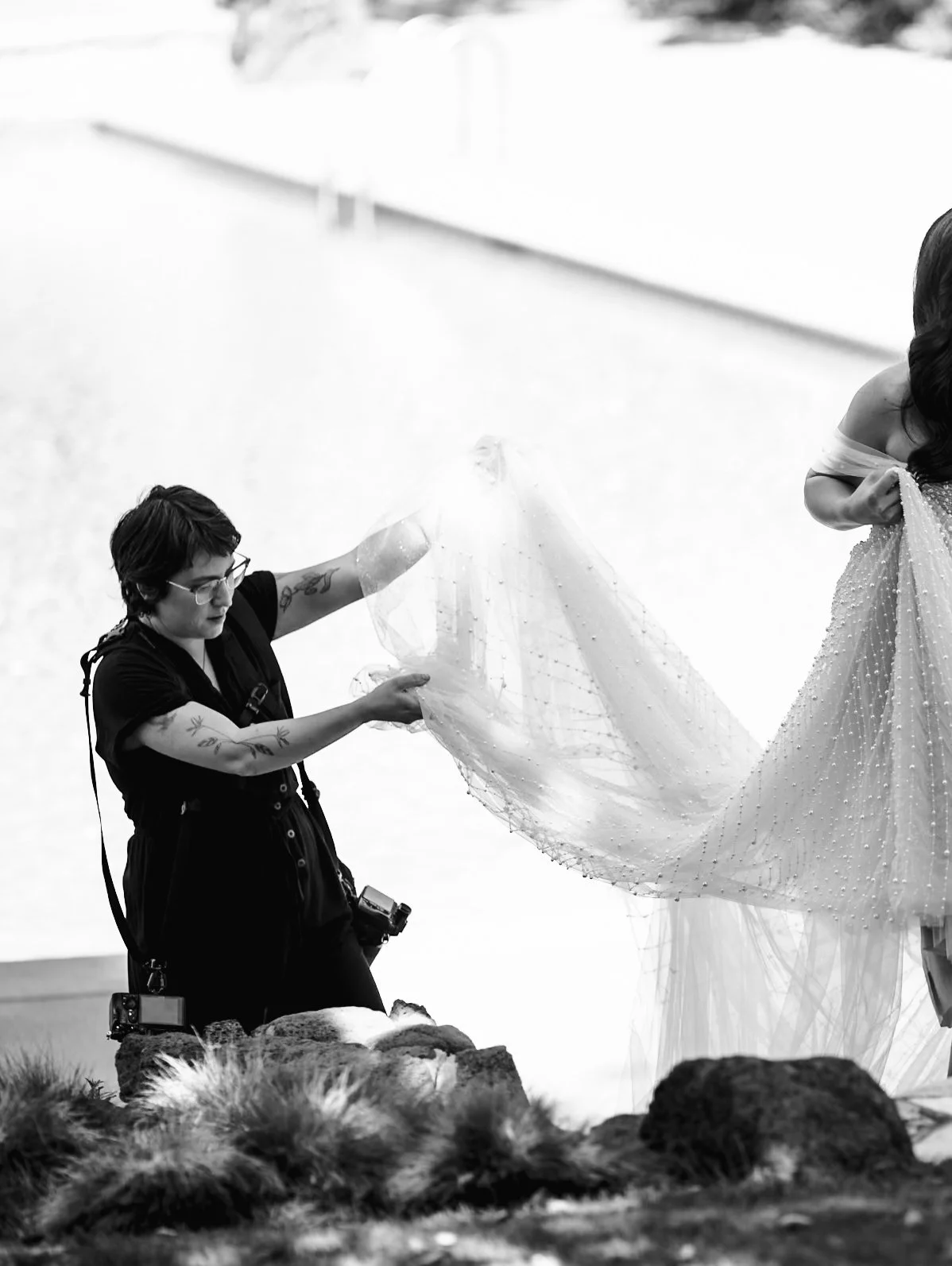
gearheads & uncle bobs
a long list of all my gear
the uncles who ask about it
and why it matters
i know i’m going to hear this from at least one uncle
There’s an affectionate term that wedding photographers have for the old guy that inevitably pops up at every wedding. “Uncle Bob.” The photography enthusiast at your wedding. Yes, he’s probably an uncle (might be your dad, nephew, brother); and yes, for whatever reason, it’s usually a guy. He’s the one with a big old camera around his neck who feels compelled to take photos of anything and everything.
This guy with a camera usually comes up to me and asks me:
“Whatcha shooting with?”
I show him my cameras and his eyes widen — “Wow, what a set-up! That’s a lot of money right there!”
His wife (or daughter or whoever is humoring him today): “Oh, really? How much?”
“Hah! You don’t even want to know! No one go near that photographer, you don’t want to bump into one of those lenses! That’s more than my mortgage! That’s how you know that camera takes good pictures!”
Thanks, Uncle Bob.
Well, it’s not always the uncle with a camera. A lot of people ask me this, usually out of simple curiosity:
“Whatcha shooting with?”
I don’t tend to ask this question of other photographers, myself. I’m more inclined to want to peek at the back of the screen —
“Whatcha shooting?”
Because I truly don’t think the tools are as important as the end result.
I’ve seen some incredible photos come out of point-and-clicks (and disposable cameras, and Polaroids…), and some not-so-great photos come out of the most expensive camera gear you can think of.
At the end of the day, our cameras are just like paints and paintbrushes for painters, or clay and a wheel for a potter. They’re tools!
That being said… if you know your craft well, you know the right kinds of tools that you need to create the work you want to make.
gear for the gearheads
I don’t consider myself a “gearhead” (or someone who’s obsessed with the mechanical objects and specs of photography), but I have done a lot of experimentation and careful research throughout the years. I’m proud of what’s in my camera bag, because I know that the things in there do exactly what I want them to do.
What’s in my bag:
Two Sony A9 camera bodies
Sony Zeiss 35mm
Sony Zeiss 55mm
Sony Zeiss 85mm
35mm film camera (I rotate a few of these)
Rolls of 35mm film, black and white + color
Profoto A10 flashes
Wireless trigger
Blackrapid camera straps
Black leather camera harness
Monopod
Used less often, but handy to have:
Sony 24-105mm
Sony 16mm
Medium format film camera (I like my Mamiya 645 the most)
120mm film
Little prisms / mirrors
Light stands
why do i have this set-up?
I really like my Sony mirrorless cameras. Mirrorless means there’s no traditional mirror mechanism; instead, it’s a big smart sensor. The biggest benefit of shooting with Sony mirrorless is the silent shutter. I used to make little clicking sounds everywhere I went — now I’m quick and silent!
Another benefit of these particular cameras is that they shoot really well in low light. I’ve astounded clients and many other photographers with the shots I’ve captured in dark churches, dim restaurants, basements… you name it. Almost every wedding I’ve been to has had dark areas, and I’m grateful that I can roll with any lighting situation.
Next thing: my prime lenses. My go-tos are my 35mm (which is a workhorse for documentary work, since it “sees” in about the same way that our eyes see), and my 85mm (which is good for portraits and being able to shoot from farther away). My 55mm is newer and that one is really fun to play with, or hand off to my second-shooter. It’s super light and in an “in-between” zone that pushes me to “zoom with my feet” more often.
Zoom with my feet — that’s something I’ve learned over the years. When I started out photographing events, I used a big zoom lens all the time. It’s still a good lens in a pinch (which is why it’s still in my bag). But the quality of the prime lenses is unbeatable.
Basically, a prime lens has more glass, and less mechanisms inside the barrel. So my images with my prime lenses turn out sharper, with creamier backgrounds. And also, usually: stronger compositions.
Because I have to think more when I’m shooting with primes.
And thinking more about what I’m seeing = stronger images.
flash! flash! flash!
I’ll be honest — I prefer ambient exposures most of the time. Especially because my Sonys can work so well in low-light. But I always bring my flashes with me, because I’m never sure what the day will bring! Flash works really well for dance floors. It’s also good to isolate subjects in an otherwise cluttered space, or bring out more of what I want a composition to be focused on.
The wireless trigger is cool — that means I can take photos from my camera, and it triggers an off-camera flash. This results in a more dramatic, less “flat” look than on-camera flash.
If I’m by myself, I might need my light stands. However, I much prefer having my second photographer be my human light stand. That way they can move whereever I need them to go.
(An excellent reason to have a second shooter — it’s not just about the “second angles,” it’s more about them being there to help me troubleshoot photos.)
i don’t leave the house without…
Charged batteries
Lots of SD cards
My insurance policy
THESE are the crucial things that differentiate a professional photographer from a hobbyist. I have back-ups and Plan Bs in my back pocket. Because on a wedding day, anything can happen.
one more thing…
My most important thing that I bring with me on a wedding day:
My photographic eye
Because people don’t just hire me because I have expensive cameras. They hire me because I’m the only one who sees things the way that I do — that’s true for everyone! — and they like the way I think, feel, listen, and hold space for their story.
My gear is simply the tool I use to transfer what I see from my eyes to your heart.
If you want to know more, drop me a line.
